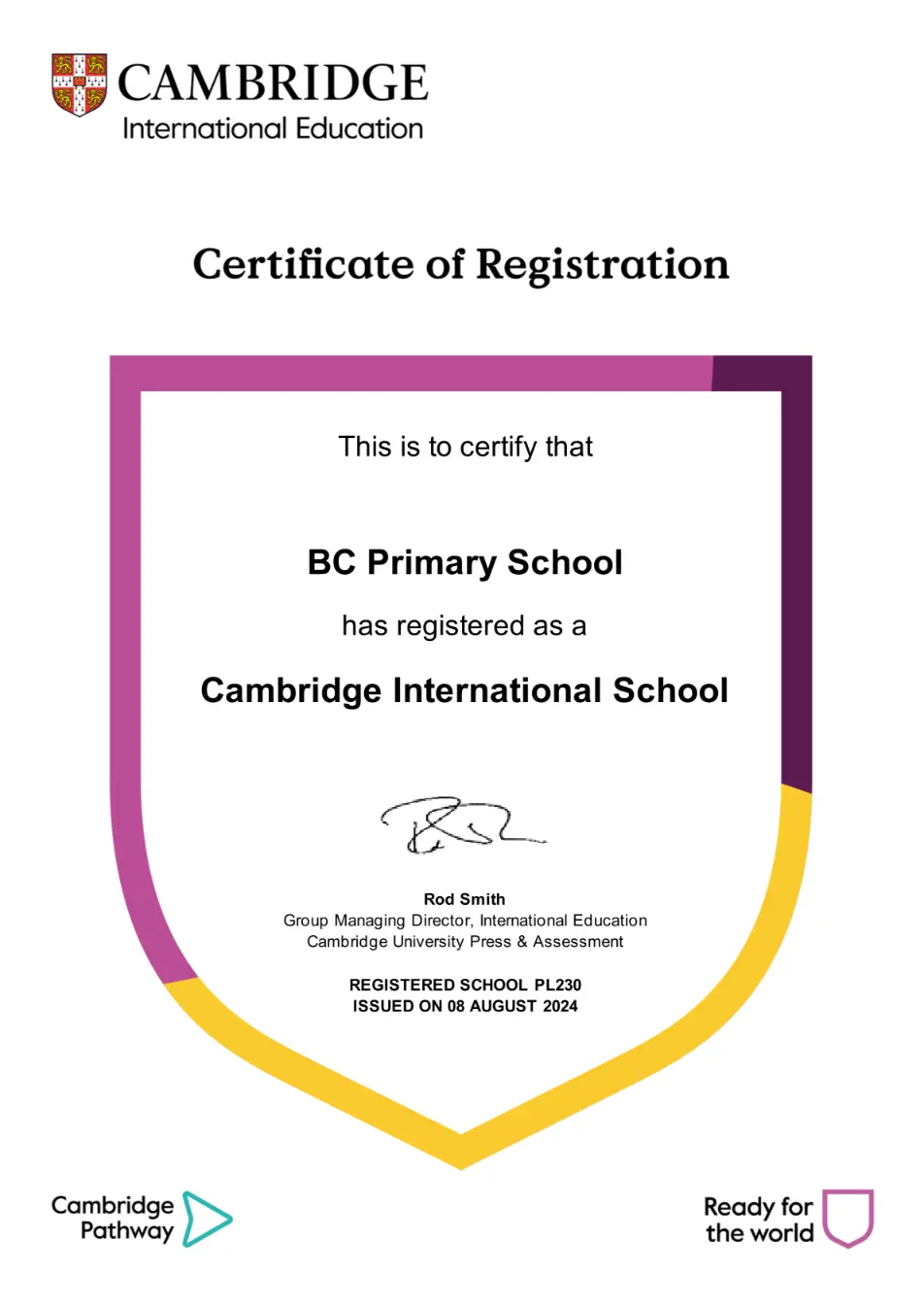

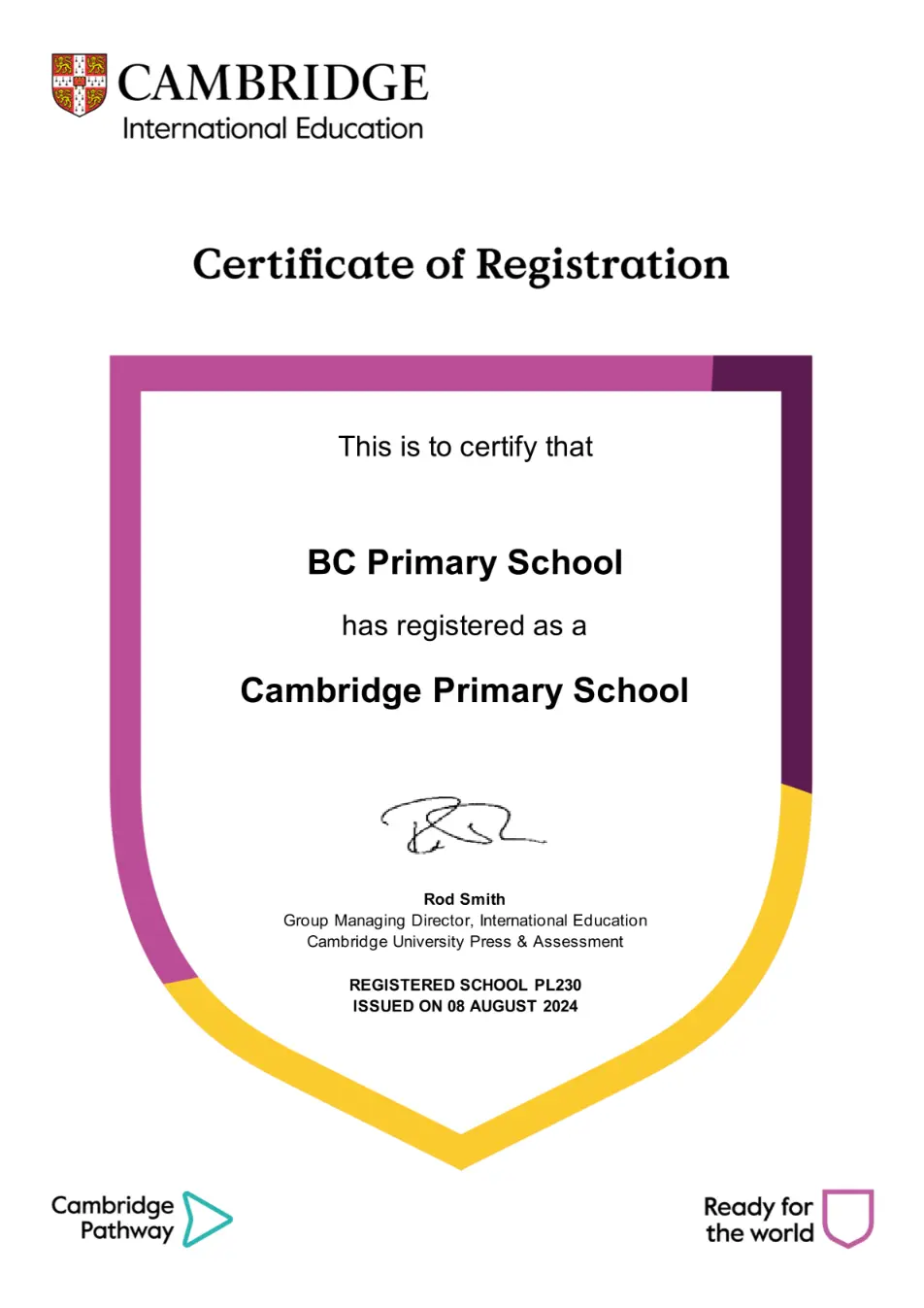
At our school, five components of the Cambridge programme are taught in English:
- Global English – English language,
- Mathematics,
- Science – natural sciences,
- Well-being – delivered in Years 1–3,
- Global Perspectives – delivered in Years 4–8.
The programme is highly flexible, allowing it to be adapted to local conditions. As a result, it can be effectively implemented in schools around the world while respecting regional and cultural contexts.
In the language domain, Cambridge programmes support the comprehensive development of pupils’ language skills. They place strong emphasis on a high standard of reading and writing, using authentic educational materials commonly used in schools in English-speaking countries. This also helps pupils develop strong reading habits and a natural fluency in English.
In mathematics, particular attention is given to mastering the fundamentals, developing mathematical thinking and building logical problem-solving skills. The teaching process goes beyond traditional methods and is based on active pupil participation through games, activities, discussions and independent discovery.
In science, knowledge acquisition and understanding of the world take place through observation, experimentation, and forming and testing hypotheses, making learning engaging and stimulating for pupils.
An important element of the programme is also Well-being education in Years 1–3. Its aim is to support pupils’ emotional wellbeing, develop social skills, build self-esteem, and foster attitudes that promote mental health and positive relationships with others.
In Years 4–8, pupils follow Global Perspectives, a subject that develops critical thinking, analysis of global issues and project-based learning skills. Pupils learn to recognise different viewpoints, form their own opinions, and express them in a thoughtful and responsible way.
Na tle tradycyjnego modelu nauczania programy Cambridge wyróżniają się między innymi:
Education delivered within the Cambridge programme is based on a holistic approach. It involves not only the transmission of knowledge but also the development of key competences such as critical thinking, research skills and effective communication. The aim is to prepare pupils to achieve high academic results while also enabling them to function consciously and responsibly in a rapidly changing global world.